
Getting Ready for Mobile World Congress 2027: An Insider's View from Fira de Barcelona
Every March, Barcelona changes shape for four days, for one reason: Mobile World Congress. The taxi queues at El Prat get longer and the hotels along Diagonal fill up with people speaking a plethora of languages. For a short window, Fira Gran Via becomes the most important square kilometre in mobile technology.
Mobile World Congress returns to Barcelona from 1 to 4 March 2027. If you’re a marketing director or a C-suite lead working in the connectivity ecosystem and adjacent tech sector, you already know what that means for your calendar. What you might not know yet is how much of the outcome is decided long before anyone lands in Barcelona.
We’ve been part of that build-up for thirteen years now, working from a studio a short drive from the venue. Not as an exhibition stand designer in the narrow sense of the phrase, but as the team that gets pulled in when a company decides its presence at Mobile World Congress needs to do more than just occupy square metres. Strategy, concept, logistics, storage and the events that happen around the city: that’s the work, and it starts with a conversation that has very little to do with panels or lighting rigs.
Why Mobile World Congress still commands the calendar
There’s no shortage of events competing for a mobile tech marketing budget, but MWC keeps its place at the top for a reason. It’s where the deals that get announced in Q2 actually get discussed. It’s where a regional telecom operator sits across the table from a chipset manufacturer, and a CEO from Seoul gets forty minutes with a CEO from São Paulo. For one week, the entire industry agrees to be in the same city at the same time.
For the people writing next year’s budget, that concentration of decision-makers is key. Your physical presence at Fira isn’t a marketing line item so much as it’s the stage where a year of positioning either lands or doesn’t.
Which is why the design brief can’t start with square metres and end with furniture. It has to start with what you’re trying to prove to the people in the halls and work backwards from there.
Strategy before structure
Ask anyone who’s walked Fira Gran Via in early March and they’ll tell you the same thing: after the first hour, every hall of glass and LED starts to blur together. The exhibits that stick in people’s minds aren’t necessarily the largest ones. They’re the ones with a clear concept, from the moment someone reads your name across a hall to the follow-up meeting three weeks later in a different city.
That’s the part of the work we care most about and it happens months before anyone touches a floor plan. What’s the story this year? Has the brand shifted since last MWC and does the physical presence need to shift with it? Who actually needs a closed room for confidential conversations? Who’s better served by an open demo area where a hundred people can watch a product work in real time? Getting those questions answered properly is what separates a presence that photographs well from one that actually moves a pipeline forward.
What 2026 taught us
2026 marked our thirteenth year at Mobile World Congress. Across a full roster of clients in the halls that year, three presences in particular capture what that brief looks like in practice. Each one says something different about where its client’s brand is heading. Thirteen years in the same halls teaches you things that don’t show up on a mood board. Mostly, it teaches you that no two clients ever want the same thing twice.
China Mobile: from soft curves to sharp data
China Mobile made a significant shift this year. Where past editions leaned on soft curves and scenic, cultural imagery, the 2026 concept went sharper: darker tones, higher contrast and neon contour lighting tracing the outer walls like illuminated infrastructure. Inside, curved lightbox galleries and a canopy of gradient LED screens carried visitors past a robotic bar and network installations. From there, the route opened into a hospitality suite built around glass, soft light and quiet detail.


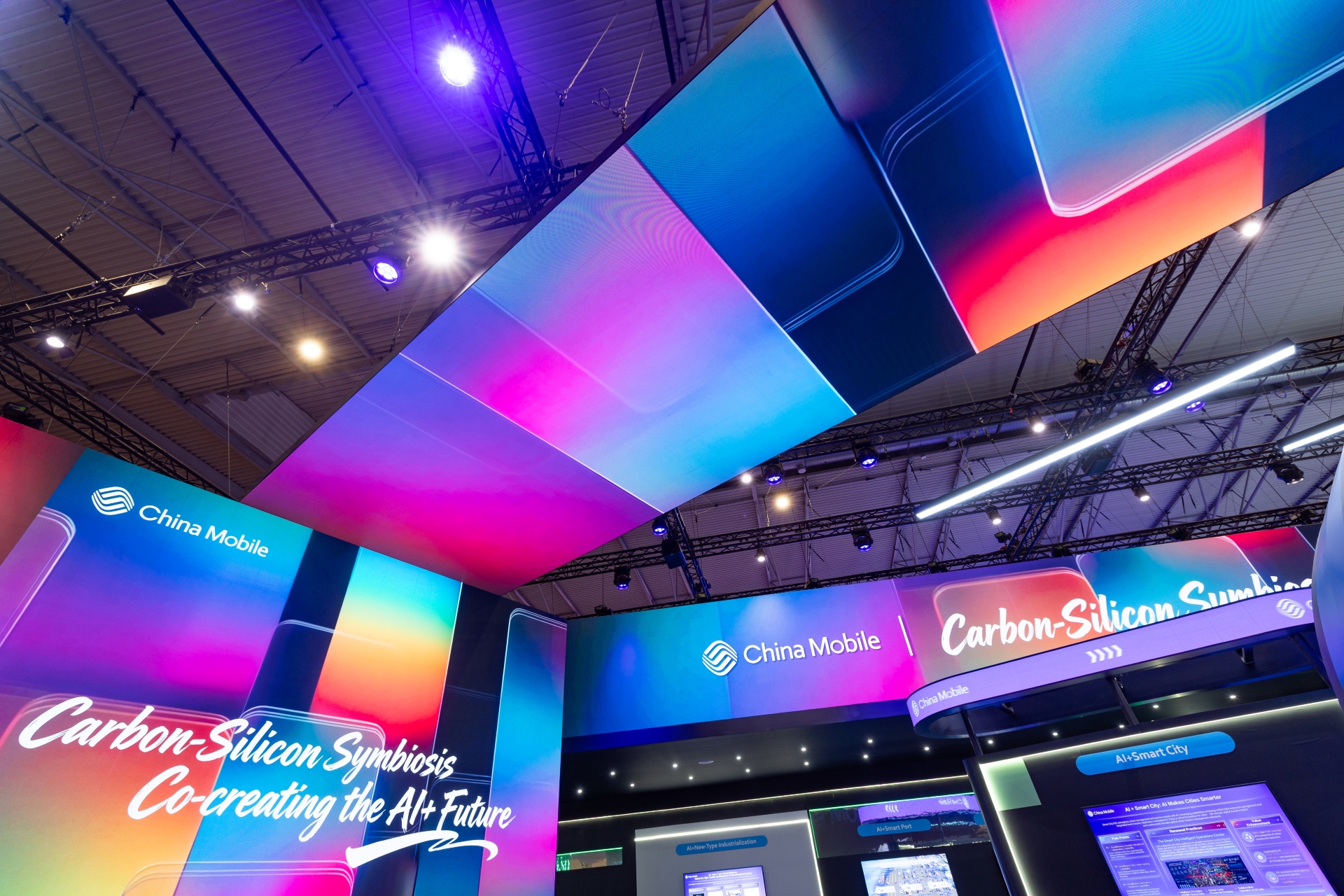
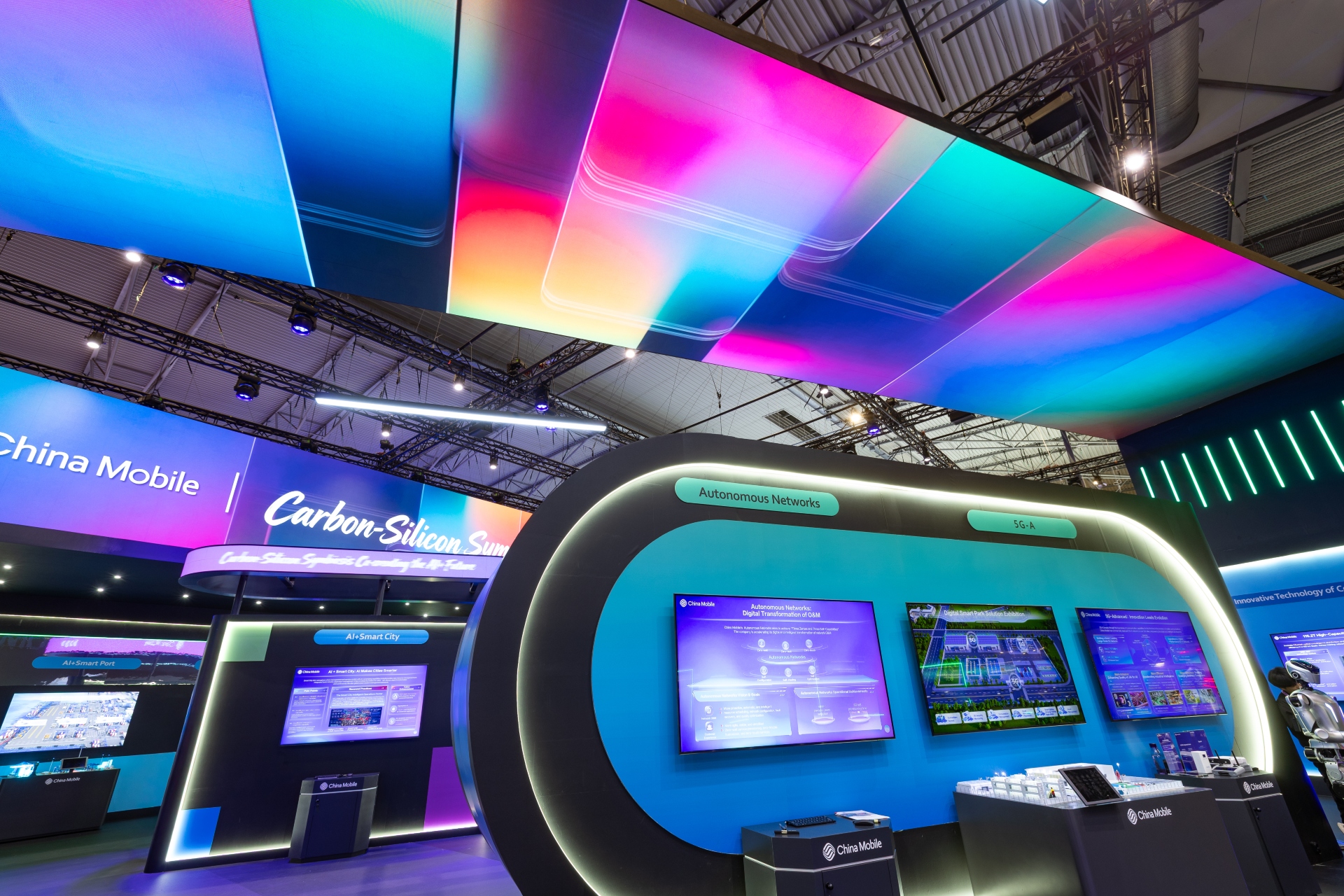
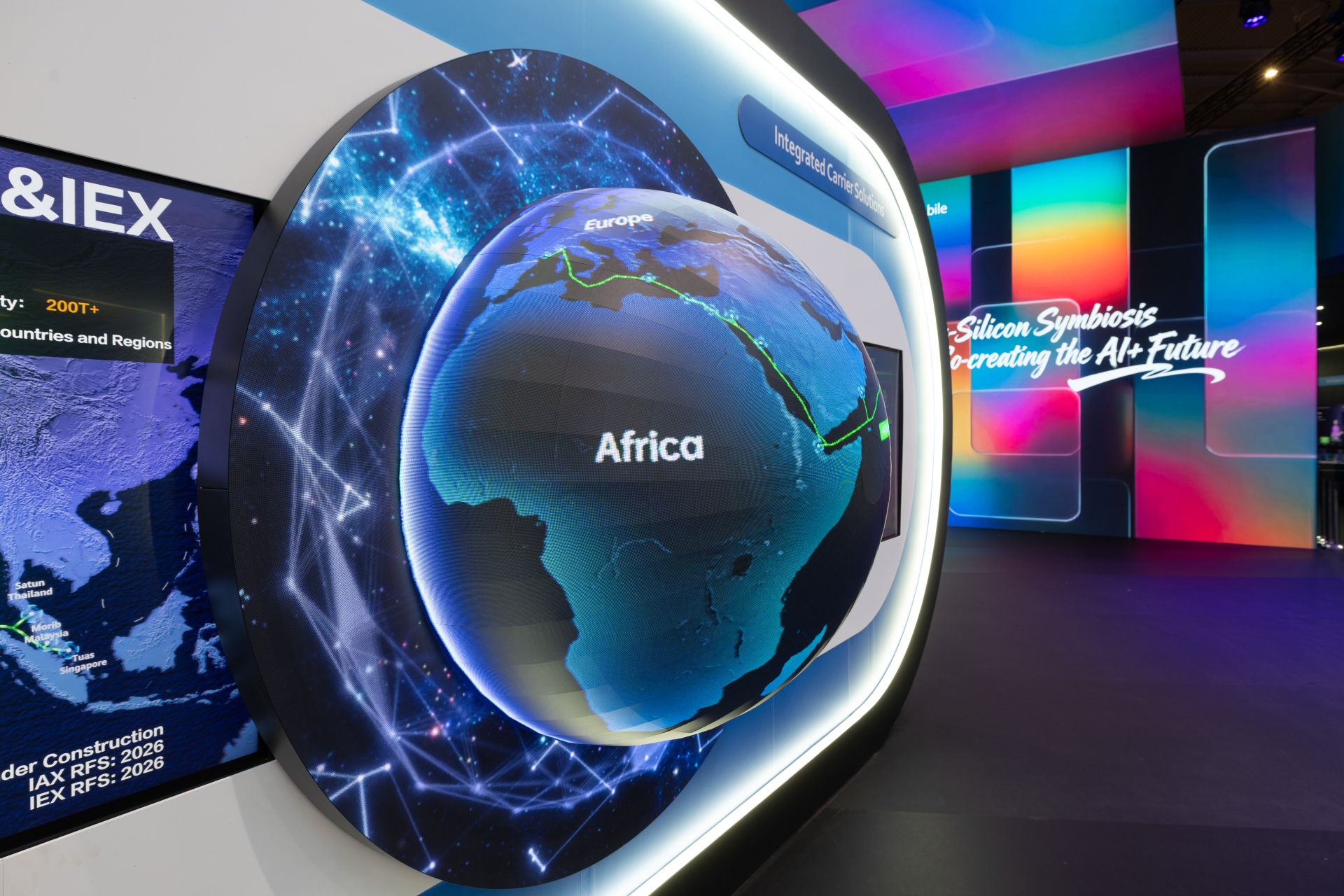
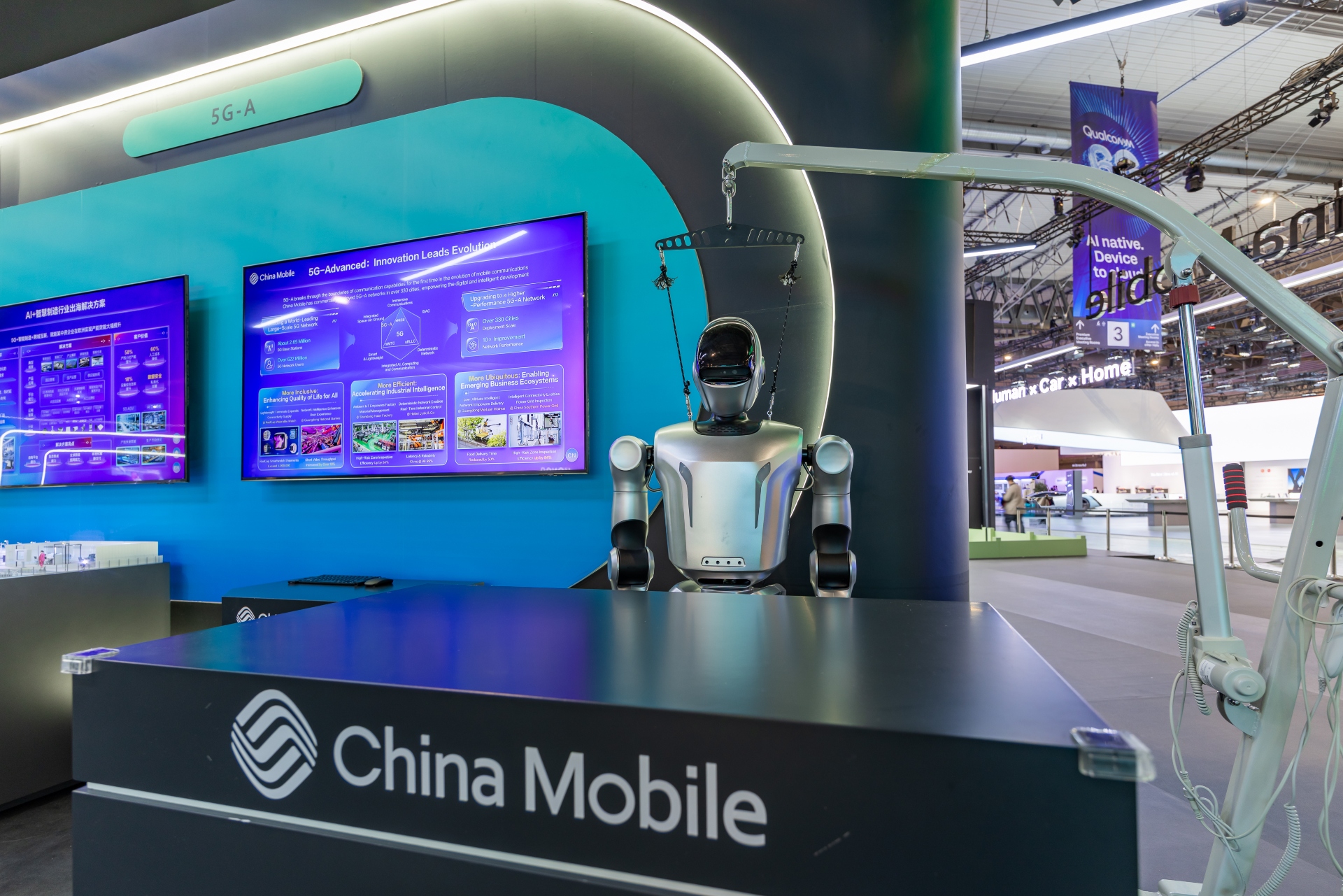
The message was unmistakable: this is a company whose identity is now built around data and speed. Its physical presence needed to say so before a single conversation started.
Viettel: geometry that speaks for the network
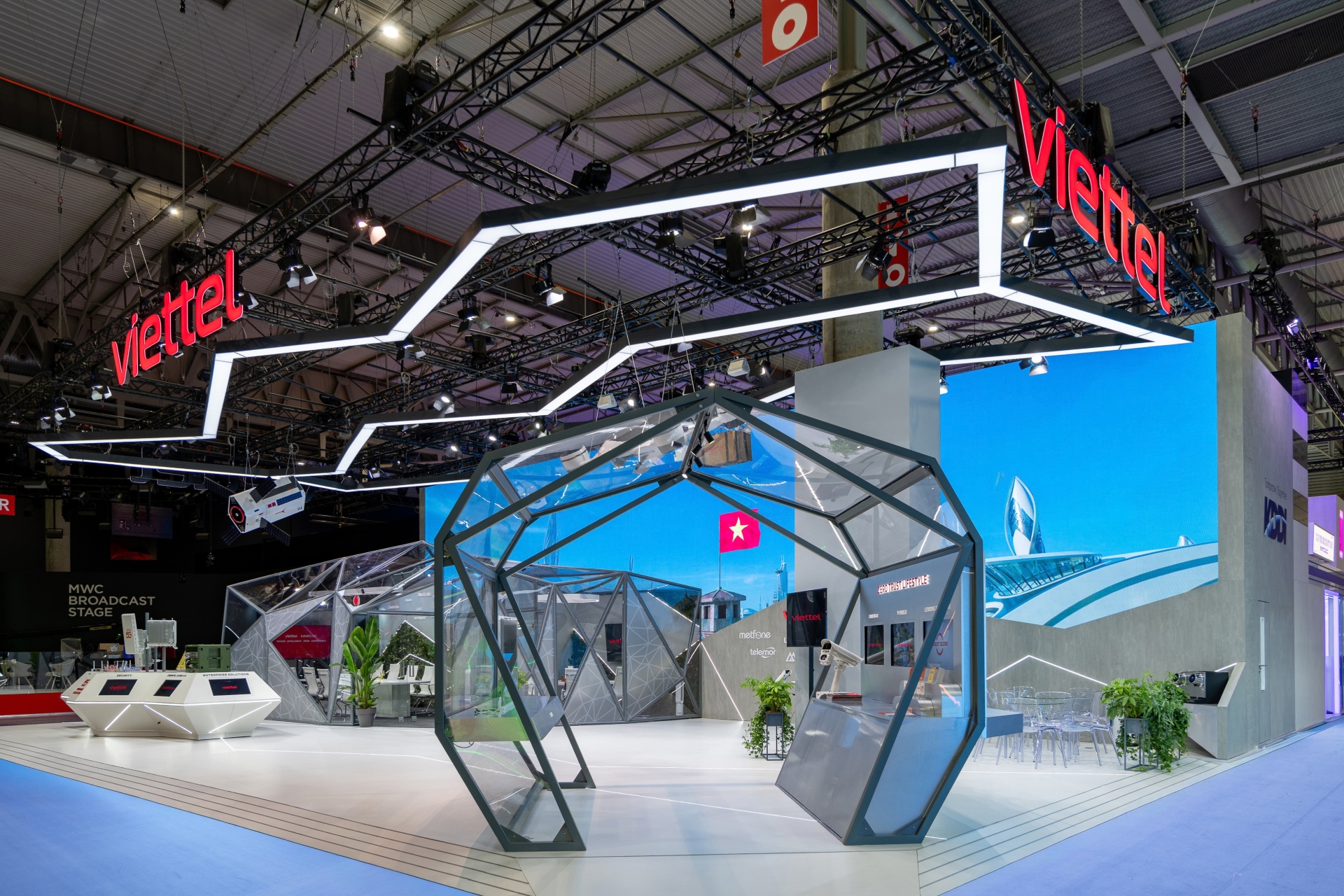
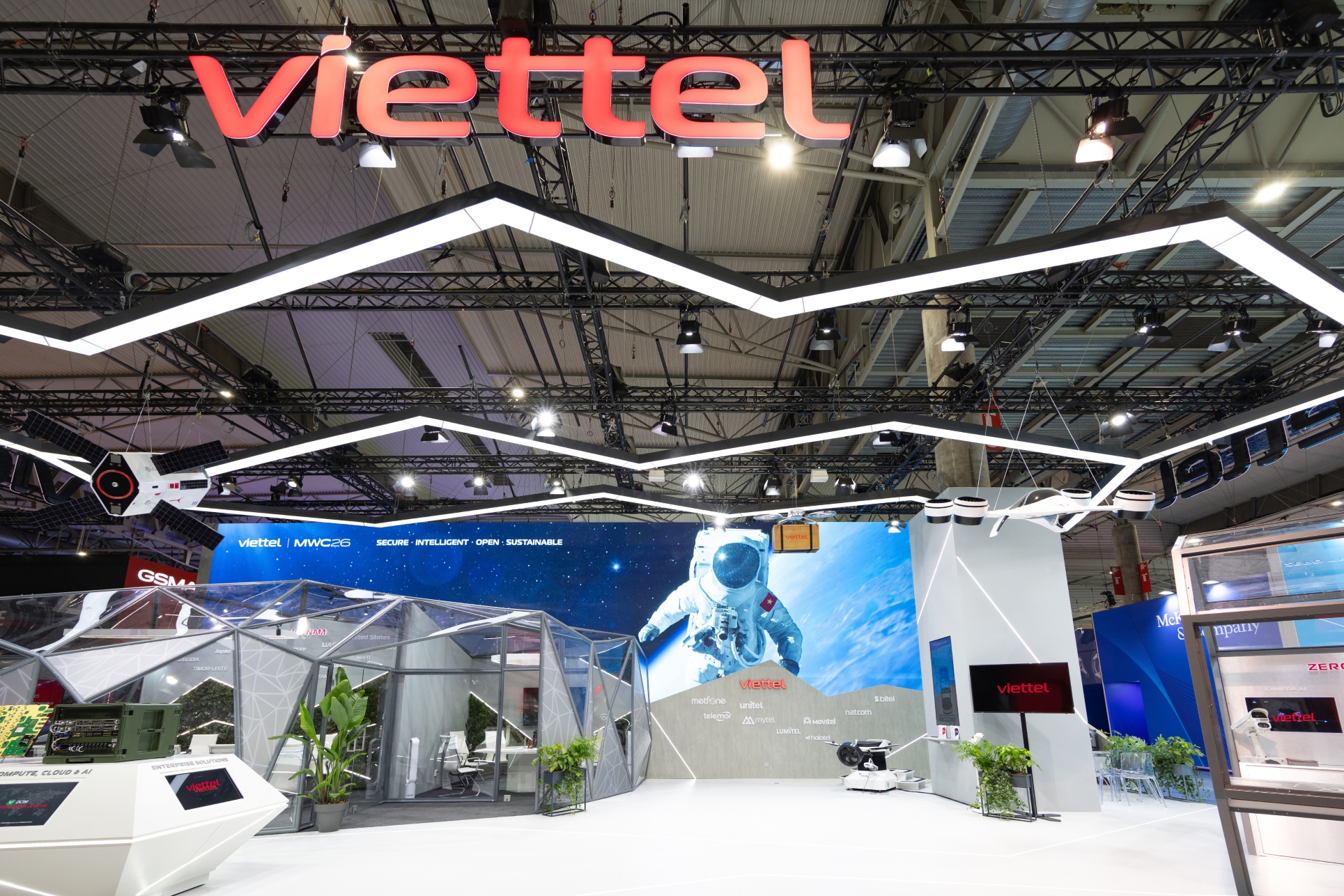
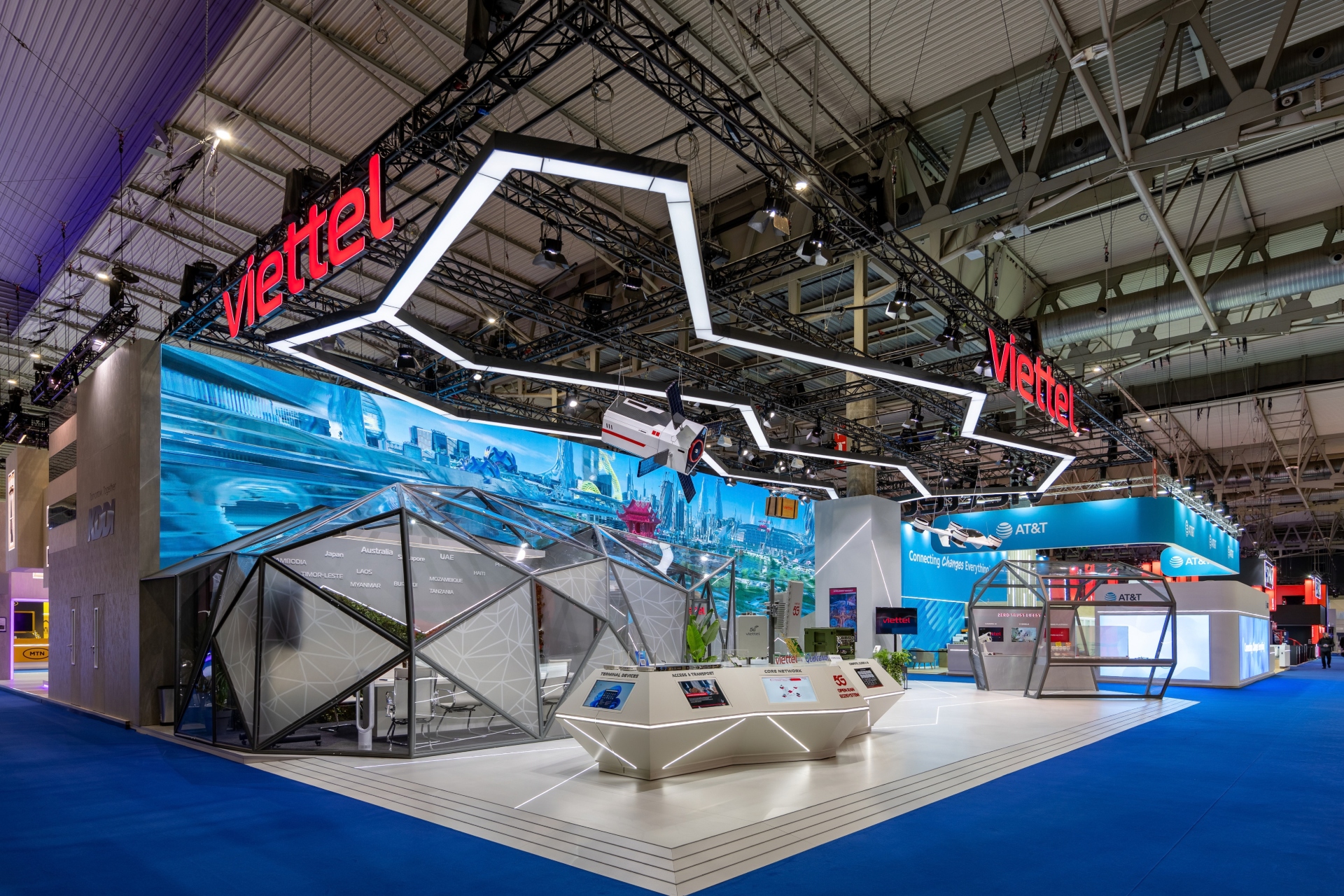
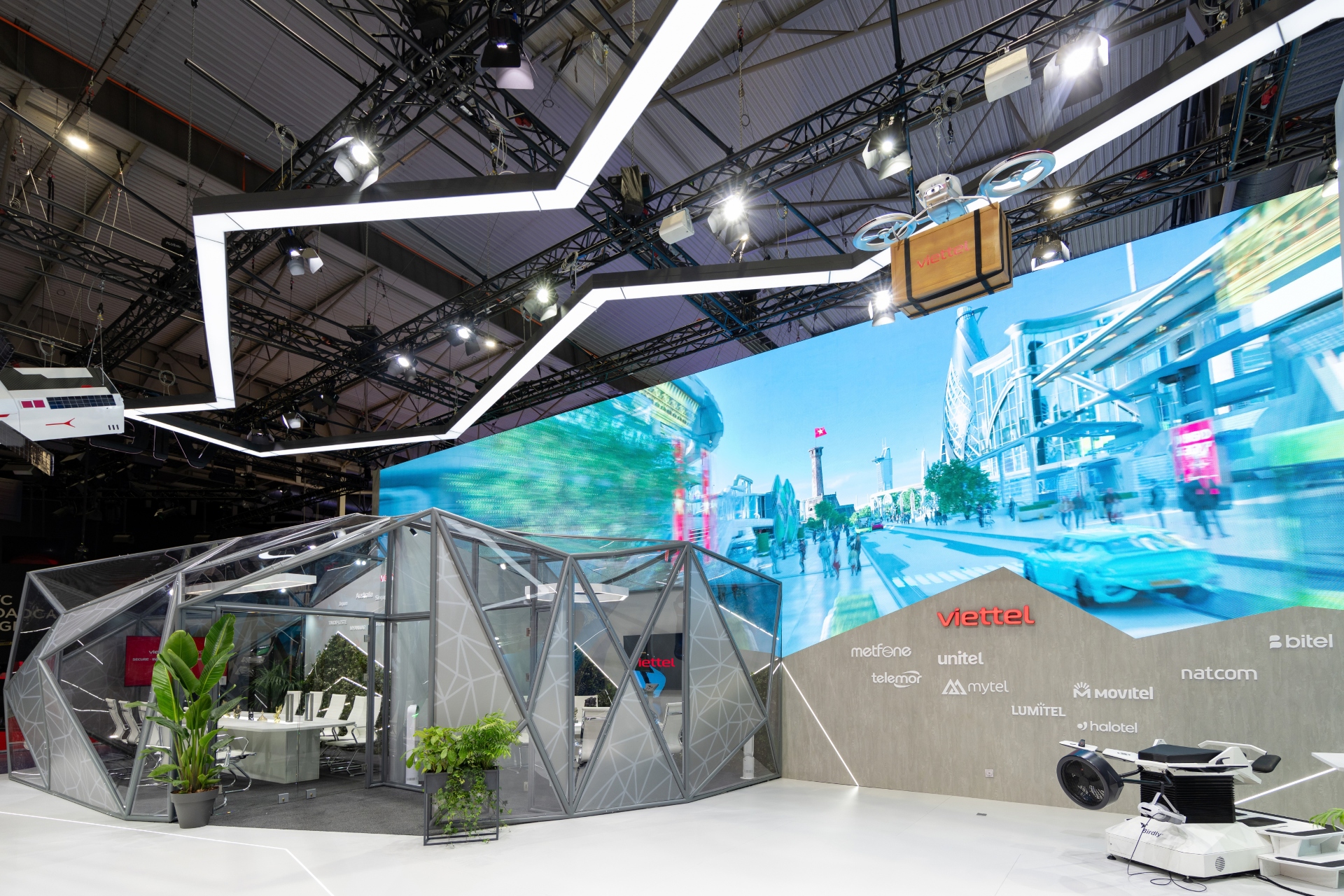
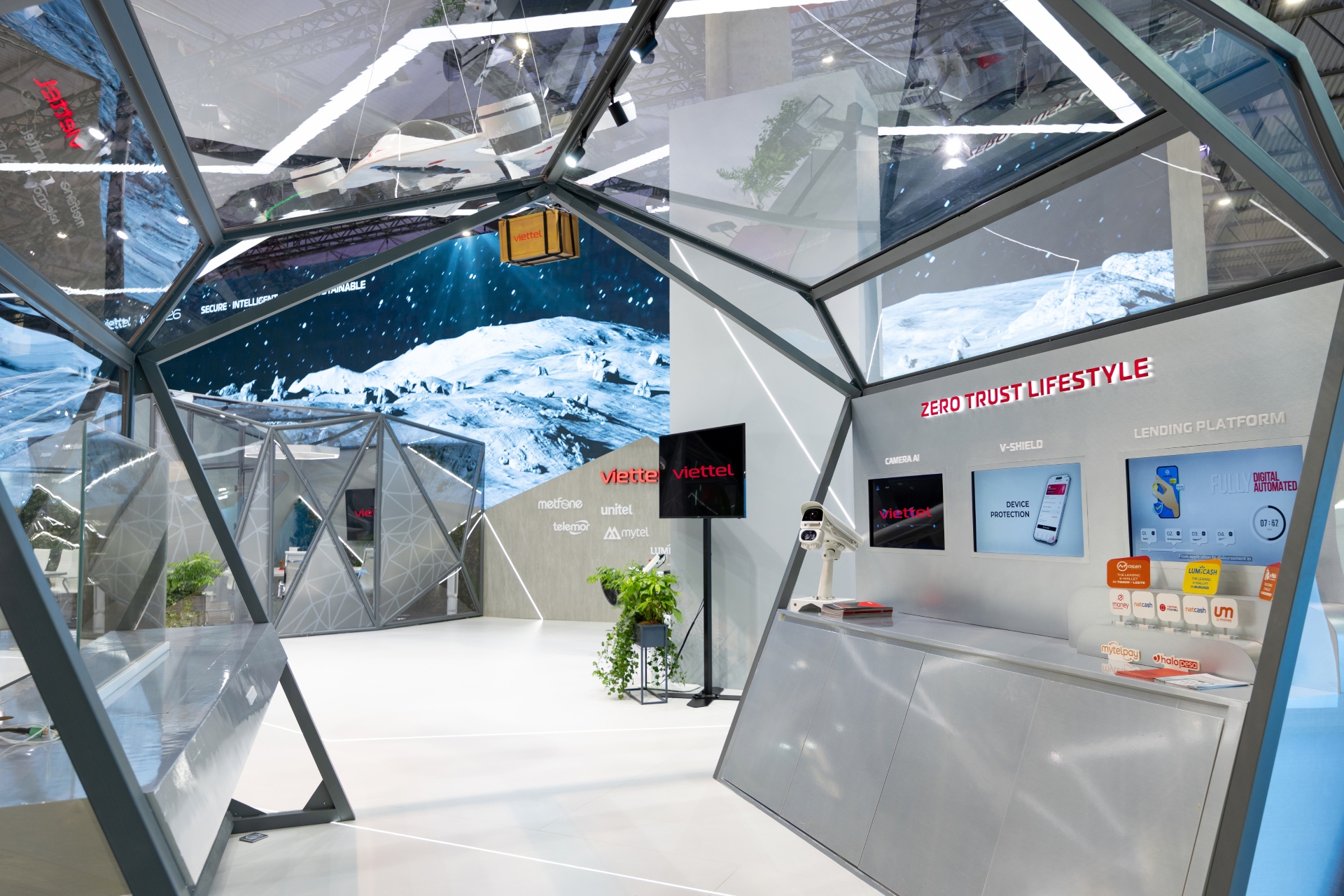
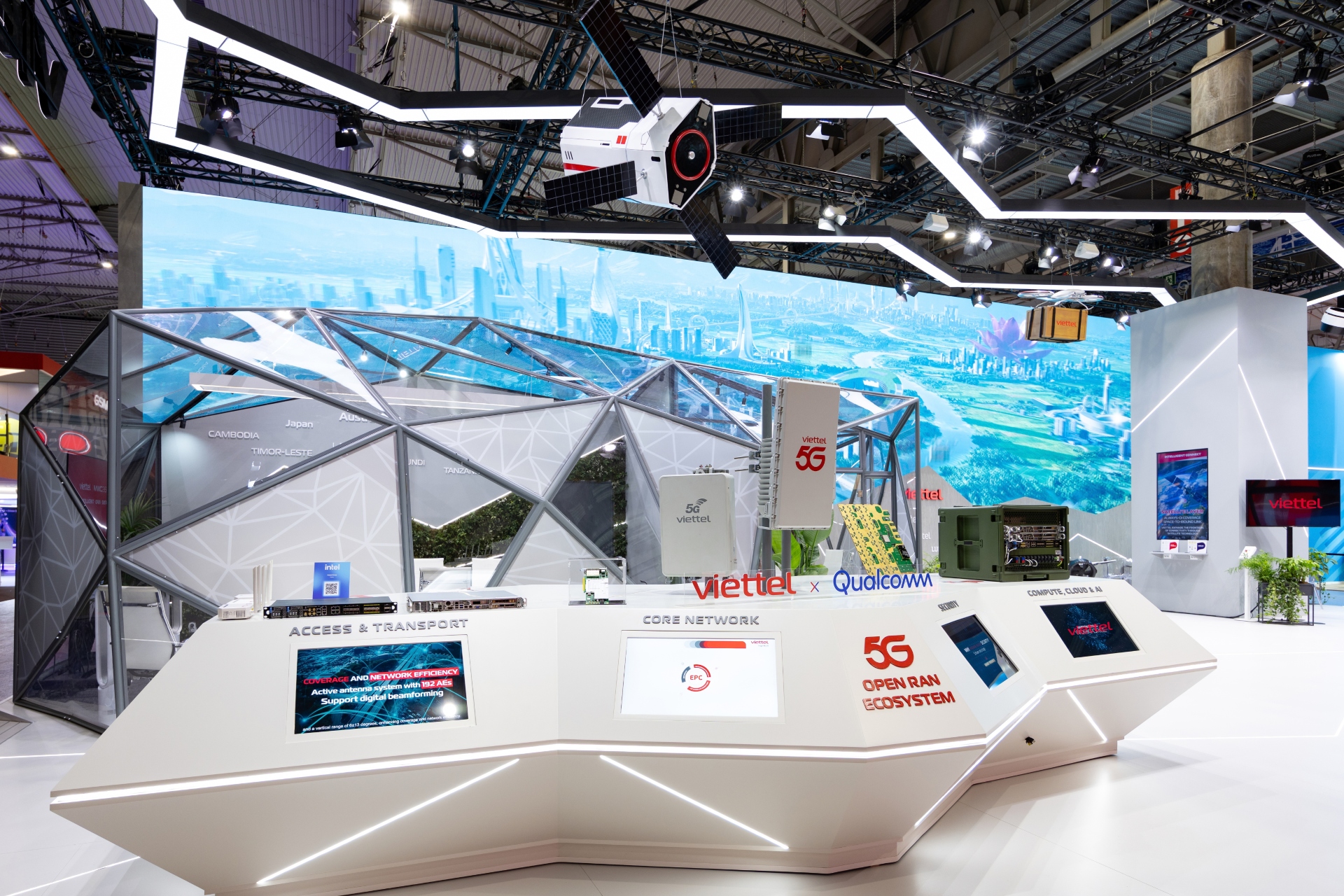
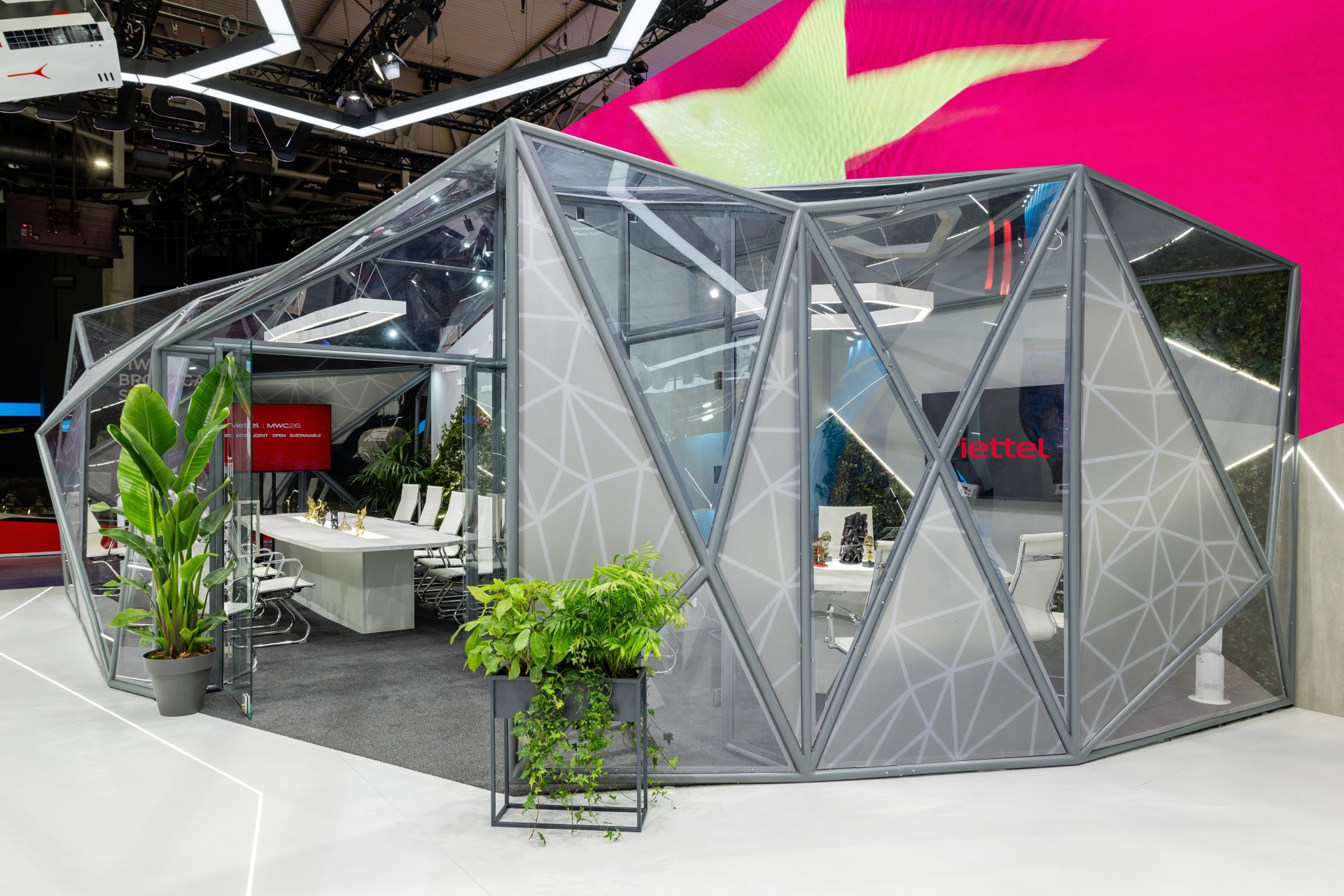
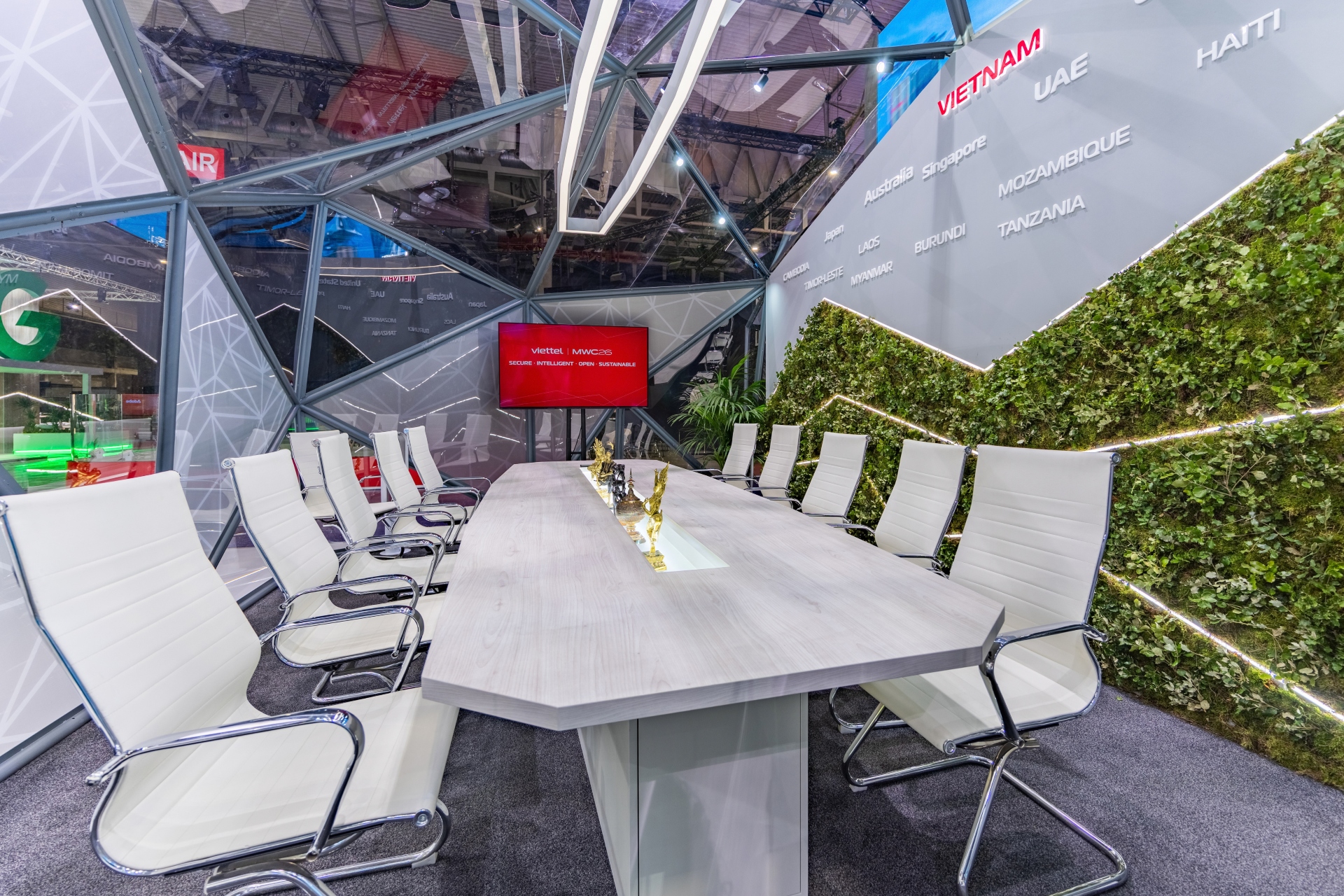
Viettel took the opposite route into the same idea. Their presence moved away from the amphitheatre layouts of previous years toward something more sculptural. At its centre stood a “mountain” volume built from folded, crystal-like planes, representing network infrastructure and national identity at once. A wraparound LED horizon, angular zones for digital life and network infrastructure, and a glass-fronted meeting dome rounded out the space. Together, they gave the whole thing the feel of a mature technology ecosystem rather than a trade exhibit. Geometry did the talking.
Arrcus: hospitality as a strategy
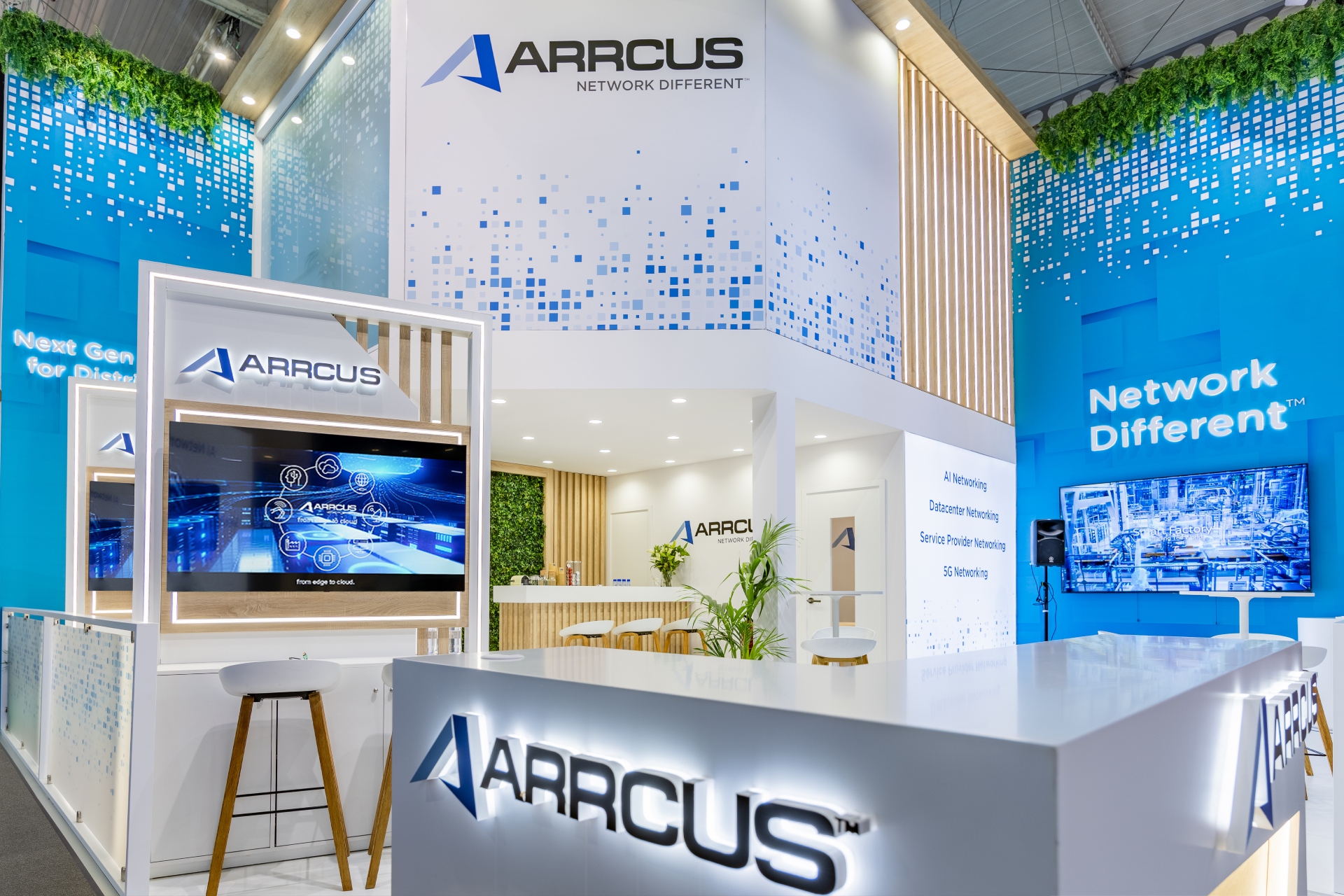
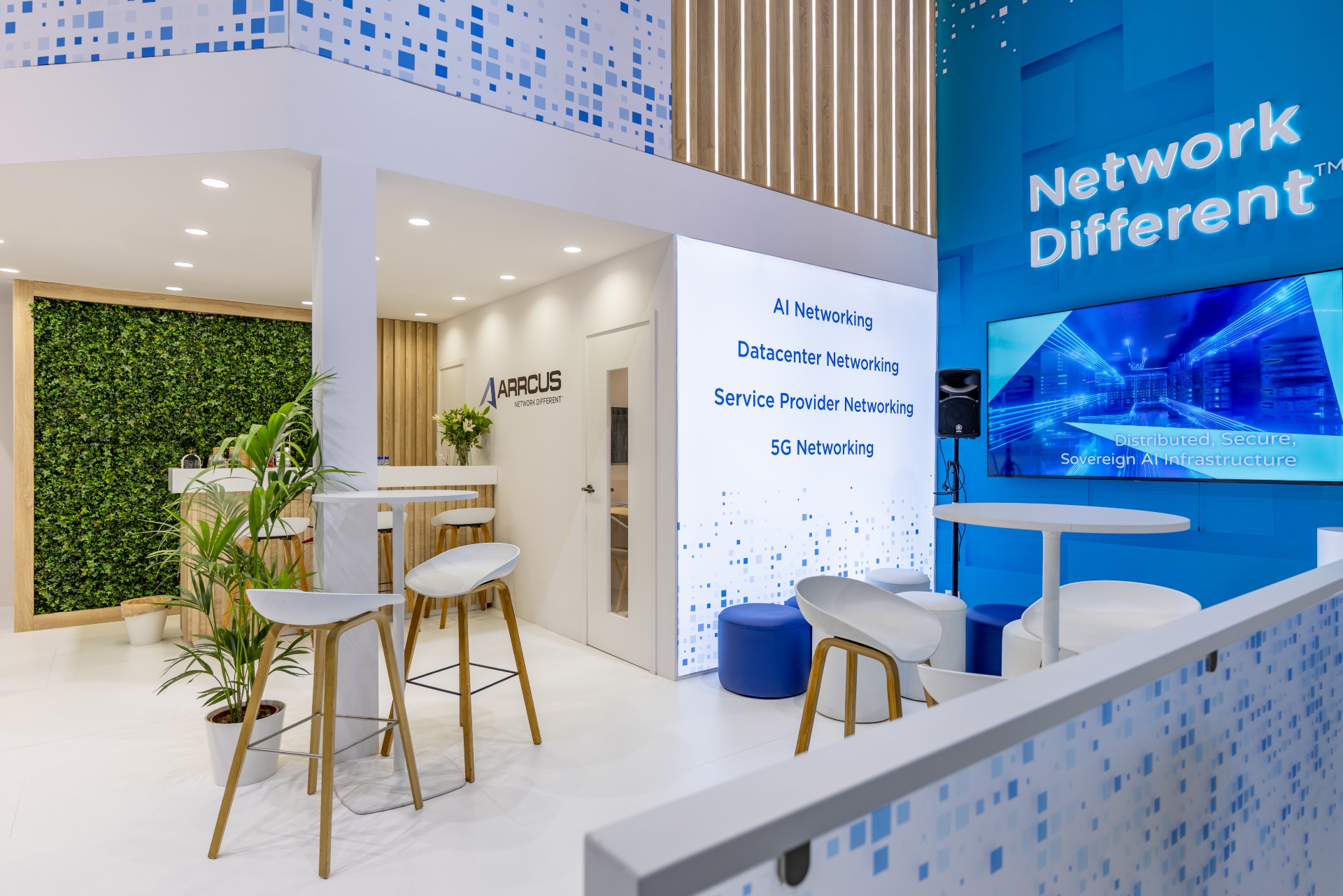
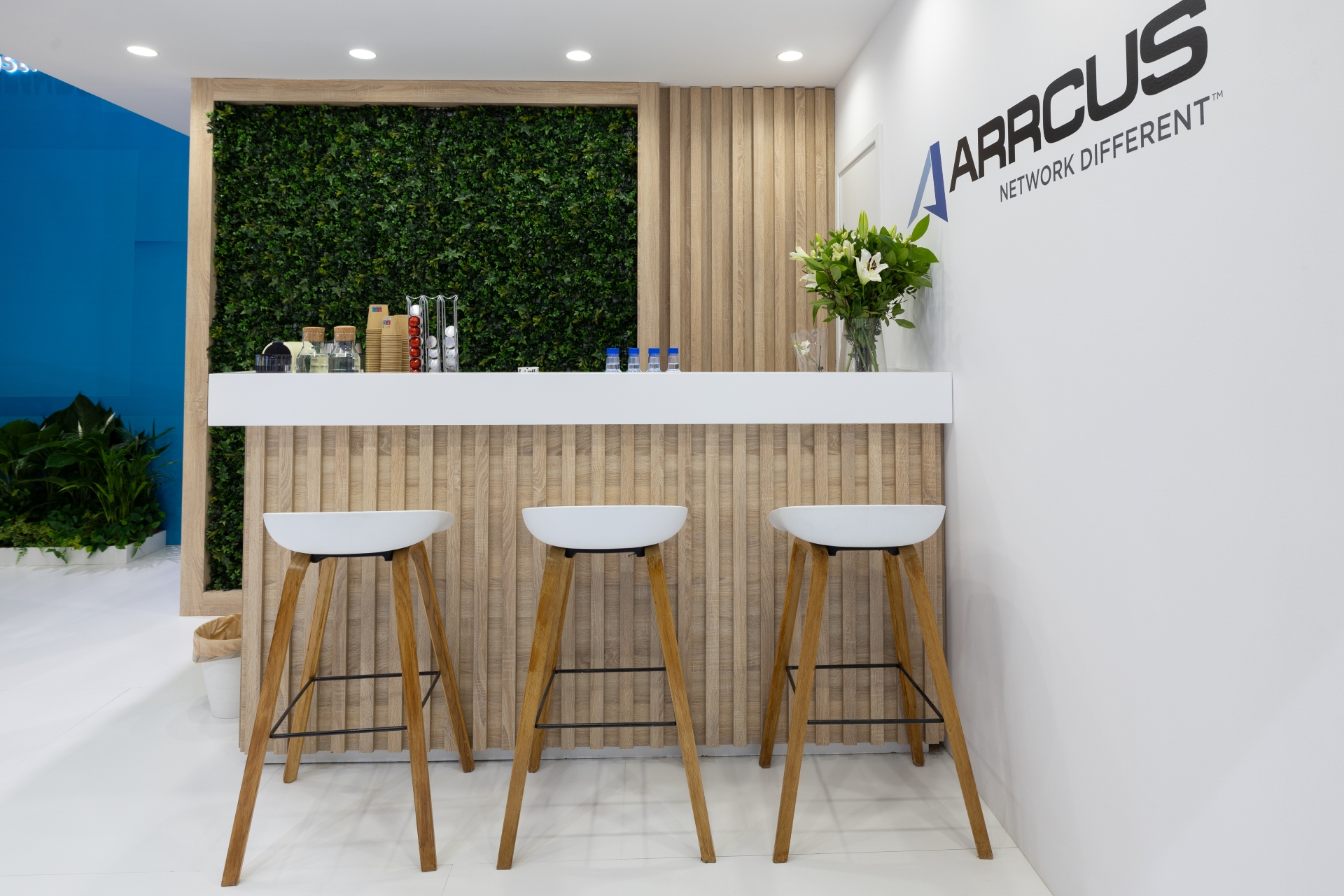
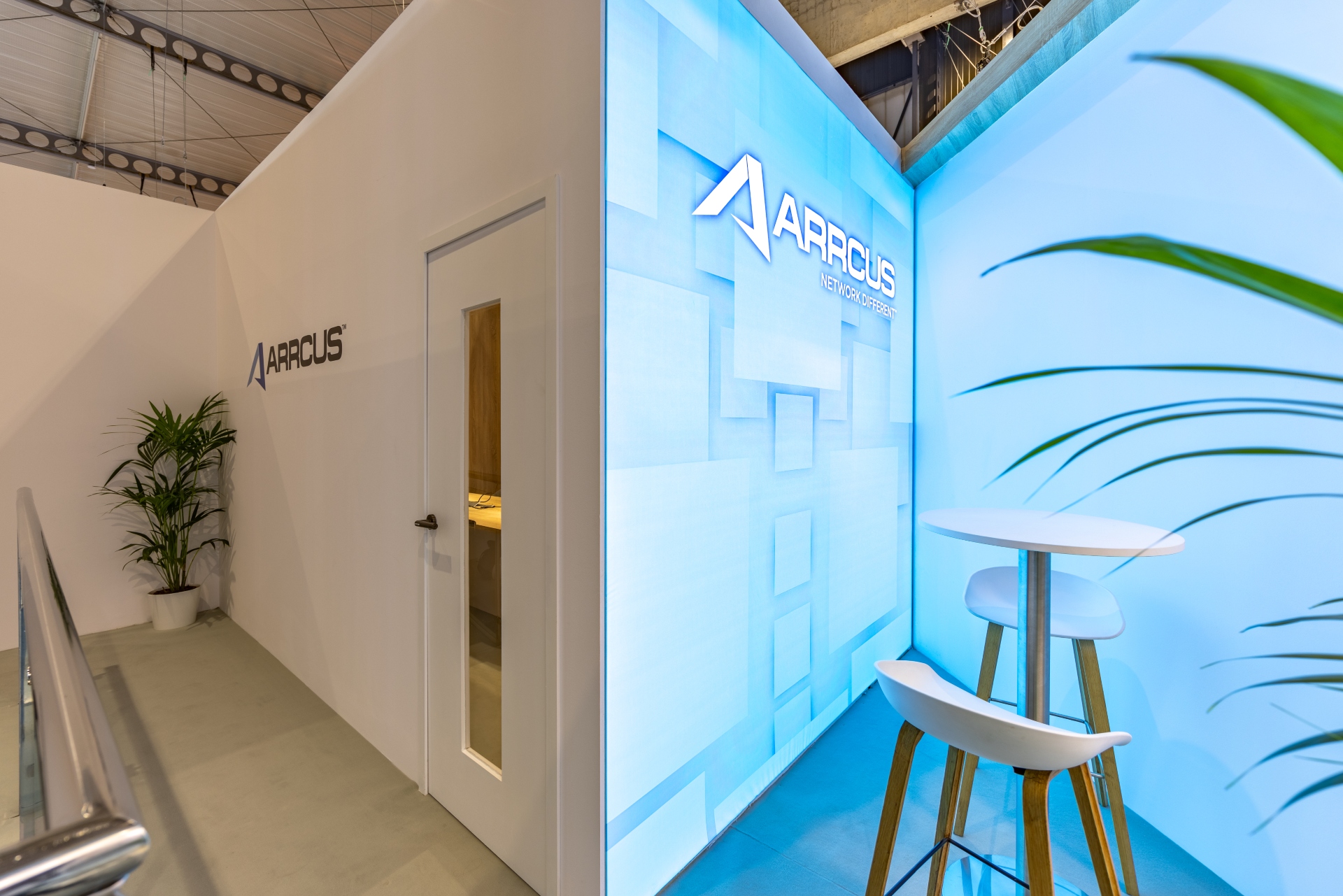
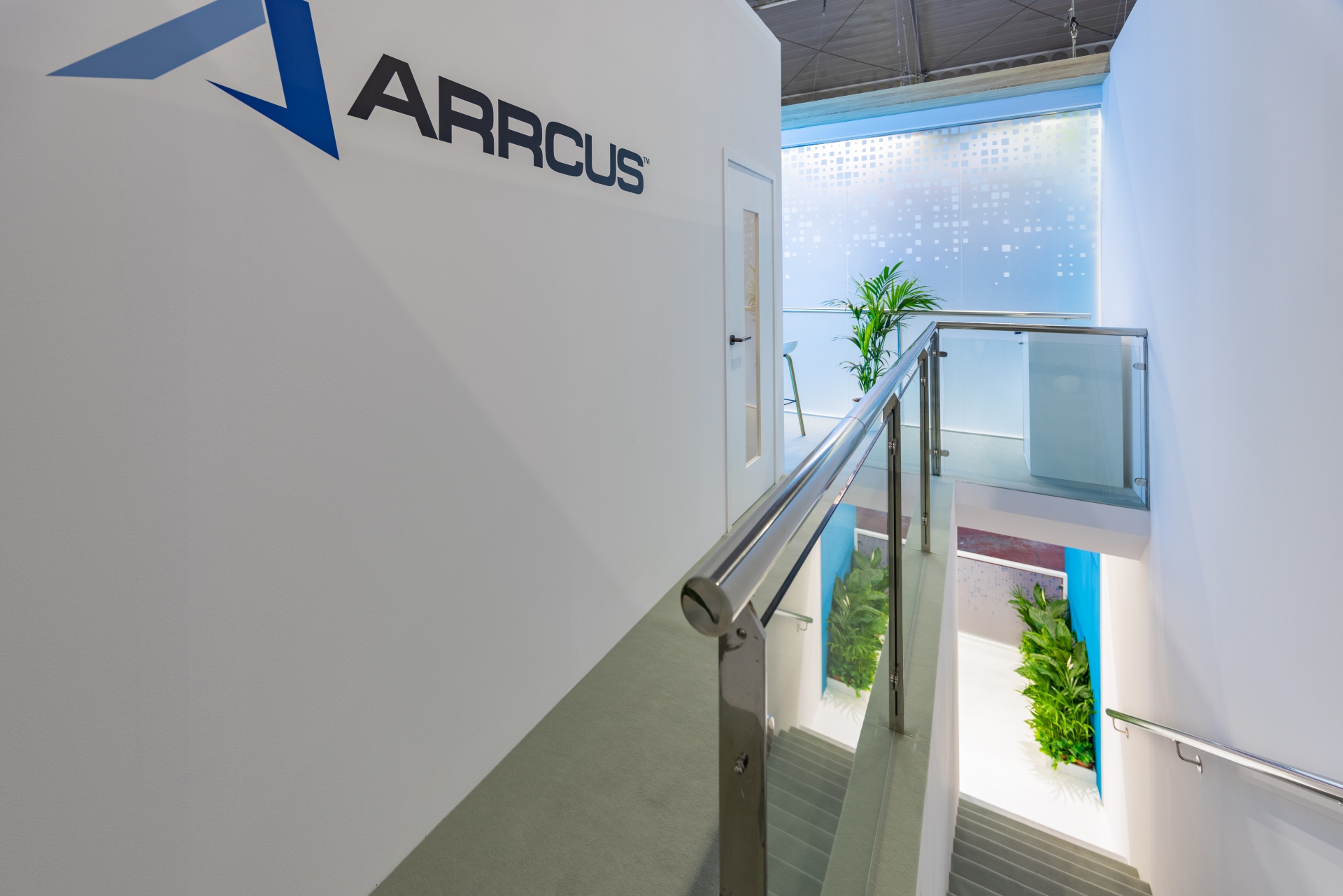
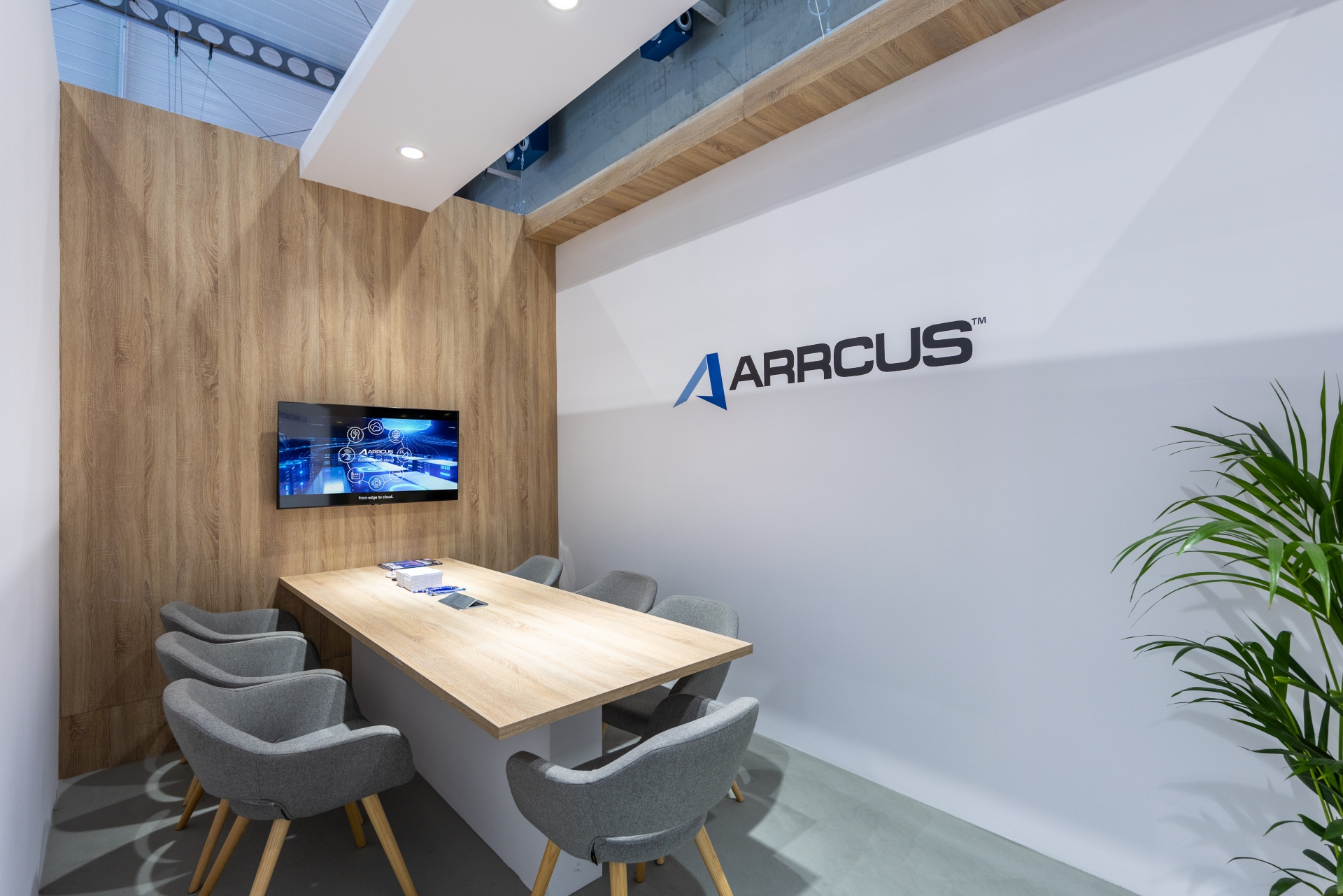
Then there was Arrcus, who proved that scale and sophistication aren’t the same thing. A multi-level structure paired clean, technical lines with warm oak, a barista bar and a vertical garden. That combination gave what could have been a purely technical presence a genuine sense of hospitality. Visitors didn’t just see the product demos. They sat down, had a coffee and stayed longer than they planned.
Three highlights from one edition, three entirely different briefs and none of them answered with a template.

The advantage of knowing Fira de Barcelona from the inside
Here’s the part that rarely makes it into a pitch deck: Fira Gran Via has its own rules, rhythms and its own ways of quietly punishing anyone who doesn’t know them. That matters enormously once you’re three weeks out from the event. Loading bay schedules that shift without much warning. Height restrictions that vary hall by hall. Storage that needs to exist somewhere between the moment your crates leave a workshop and the moment your presence is complete, tested and ready to receive your first visitor.
After more than a decade and hundreds of projects inside this exact venue, we know which hall managers to call first and which contractors are worth booking early. We also know where a local workshop and storage network saves you the kind of last-minute freight cost that never shows up in the original budget. That knowledge doesn’t photograph well for a case study. It’s often the difference between a smooth build week and a stressful one and the reason clients keep coming back with more ambitious briefs each year rather than fewer.
Beyond the halls
Mobile World Congress doesn’t end when the halls close and neither does the work. Some of the most valuable conversations happen away from the stands entirely: an intimate dinner hosted by a Michelin-star chef, a private reception on a rooftop overlooking the port, or a fringe event timed for the evening when everyone’s in the same neighbourhood.
Planning those moments takes the same strategic thinking as the presence itself: who’s on the guest list, what’s the message, and how does the evening reinforce what people saw during the day. We handle that end-to-end too, alongside the storage, logistics and on-site management that keep everything running once the doors are open.
Starting the conversation for Mobile World Congress 2027
If Mobile World Congress 2027 is already somewhere in your planning documents, the honest advice is to start talking to your partners now rather than in January. The best halls, the best contractors and the best local know-how get booked early. The strategic thinking behind a presence that actually earns its budget takes longer than most people expect.
We’d like to be part of that conversation. Whether you’re rethinking your presence at Fira entirely or building on something that’s worked before, get in touch and let’s talk about what March 2027 could look like for your brand.


